
Finders, Keepers
Guest Speaker: Otis Buckley
We've all heard the saying..."Finders, keepers. Losers, weepers." In "Finders, Keepers" Otis Buckley, lead pastor of Highpoint Bible Church in the Bronx, NY shares how we can find rest in knowing our God is faithfully at work in our lives. Because the God who finds, is the God who keeps.
Watch:
Listen:
“The God who finds, is the God who keeps.”
Scripture:
Luke 4:1-4
Jesus, full of the Holy Spirit, left the Jordan and was led by the Spirit into the wilderness, where for forty days he was tempted by the devil. He ate nothing during those days, and at the end of them he was hungry.
The devil said to him, “If you are the Son of God, tell this stone to become bread.”
Jesus answered, “It is written: ‘Man shall not live on bread alone.’”
Recent Sermons:

Do you know what your passion is, and how God has designed you to share it? What are you willing to live and die for? Part of figuring out how God made us to personally share our passion, is by finding our place in the family of God. When that happens, we become the hands and feet of Jesus to a world desperately in need of His love.

Loving words and sentiments without loving acts to back it up are hollow. When you begin to love God, you automatically begin to love what he loves. . . people. And when you begin to love people, then you want to you serve them.

It's one thing to say you believe something. It's another to actually follow through on what you believe. The heroes of faith in the Bible weren't known for their profession of faith, but the deeds that came as a result of their faith. To truly love people, we must go beyond saying we love them...and actually act on it.

Have you ever walked around in the dark? It's not easy. You can't see where you're going or what obstacles might lie ahead. According to John, this is what it's like for us spiritually when we fail to love others. So, how do we turn on the lights?

Worship is a natural part of the human experience. We will worship; either God, or other things. If we truly understand how much God loves us, we can't help but worship him.

As humans beings, we need to be loved. It is a basic, yet essential, part of our existence. Not a superficial, sentimental, or mushy type of love. But a love that truly knows us and accepts us contrary to all logic. A God love. Until we come to embrace and experience the love of God, we cannot have a true, satisfying, life-giving walk with God.

We all have hopes and dreams. But sometimes our dreams don't turn out as planned. And when our dreams don't work out...it can be hard to swallow. So what do you do when the legacy you thought you'd leave will never be realized? How do we deal with broken dreams?

Even when we're at our worst, God is for us. As we see towards the end of David’s prime, God was not done working in His life. And as long as there's breath in your lungs, He's not done with you either.
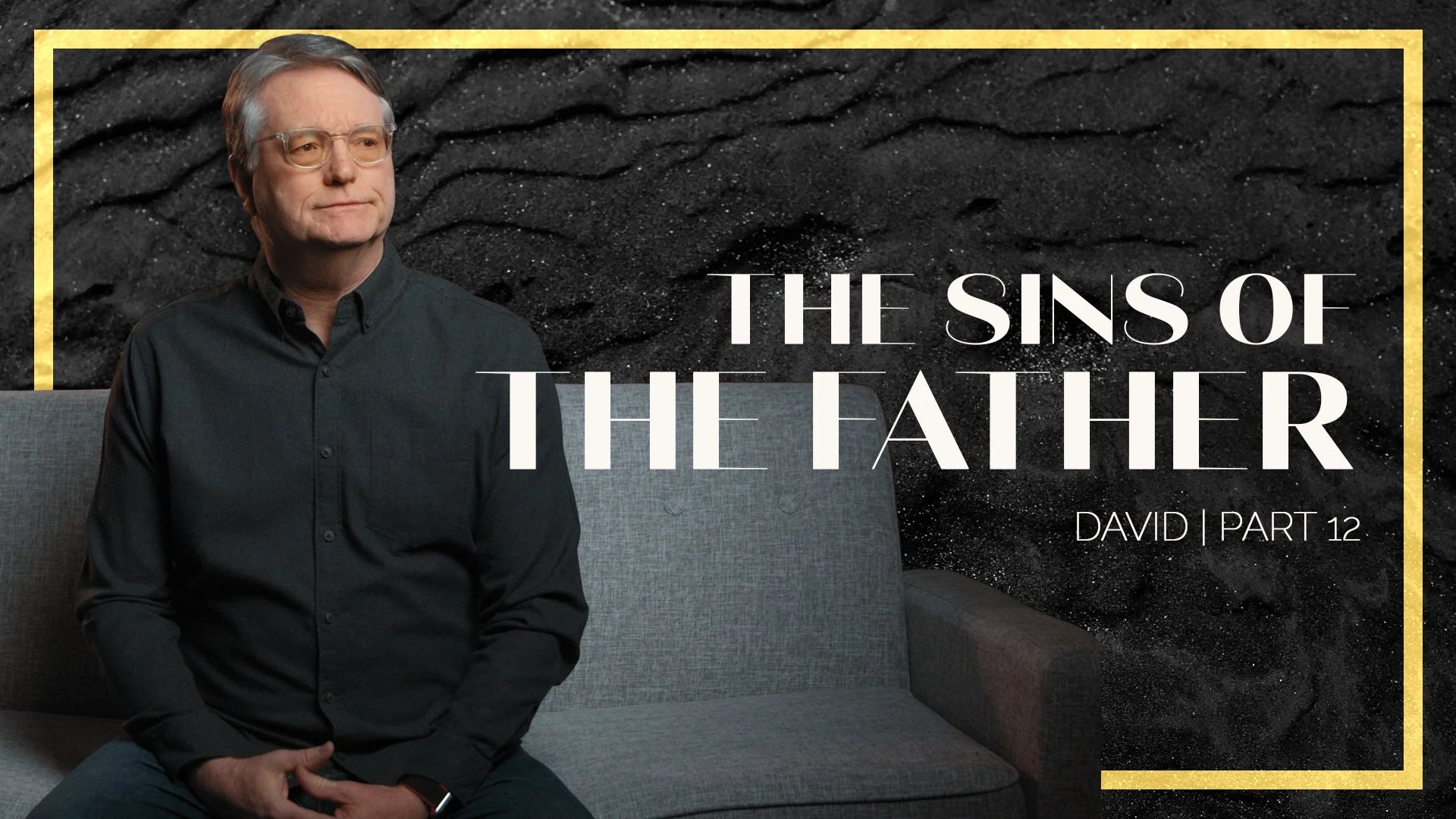
What good is it if you win all the prizes offered to you by the world and in the process lose your children? In "The Sins Of The Father," Pastor Tim portrays a first person narrative from the perspective of David during the most devastating time in his life...the loss of his son.

The cycle of sin, repentance, and forgiveness is a normal part of the faith journey. We're broken people that are prone to messing up and making bad decisions. But what if we messed up really bad? What if we’ve made choices that still haunt us to this day? Is there hope for repair?

Disastrous decisions often never just "happen." More often than not, the most destructive decisions we make in our lives are built on a series of smaller, less damaging choices. How do we pursue better choices that lead to a life well spent instead of just...spent?

There are times when it is necessary to speak out against injustice. To stand up and make our voices and protests heard. But there are also times when we're called to take a different course of action where we must trust that with God there is no such thing as injustice.

There is a simple spiritual act that maybe more than any other can change the direction of a person's life. It is a gift that God has given to everyone, and calls us to spread to others. By it cold hearts become soft and enemies become friends.

When it’s all over how do you think you will remember 2022? We can suspect what the coming year will bring, but if we've learned anything over the past few years, none of us really know what’s going to happen. In many ways, we have no control over what will happen in 2022. Yet, there are a few things we can take comfort in to ensure that 2022 will be a year to remember.

In "If I Were A Wise Man..." Doug Nearpass explores the story of the 3 wise men and what we can learn from them in our approach to worshipping Jesus.

Have you ever experienced times in your life where your plans just didn't work out the way you expected? You're not quite the person you’d hoped to be by now. Your career didn't excel in the way you wanted. You had dreams of being or doing more and yet God said, “No.” How do we navigate these instances when God shuts a door on the plans we've made?

How often do you connect fear and amazement with experiencing the presence of God? We're comfortable with a God who is always with us and is all loving. Which are true, but the Bible also tells us that the fear of the Lord is the beginning of wisdom. As loving, gracious, and faithful as God is, He is also holy, different, other worldly. Those who know Him best, will reverently fear Him.

Sometimes there are people in our lives that make our lives simply unbearable. People that genuinely cause us suffering, hurt, and frustration. For David, this was Saul. If it's true that God hates our suffering, why does he allow people like this to remain in our lives?

Have you ever had the things you lean on for support in life kicked out from under you? It happened to David. One by one David lost his support systems, and the courageous shepherd who defeated Goliath was suddenly overwhelmed with fear. How do we overcome seasons of fear like this? How did David?

In "The Power Of Friendship," Pastor Peter Seide shifts our focus from David, to his beloved friend, Jonathan. We all need at least one good friend in our lives, and we need to be a good friend to others. Someone to walk with through the twists and turns of life. What does it mean to be a good friend? How can we learn from Jonathan's example of friendship?

Everything in David’s life seemed to be coming together. He was instantly a national hero after defeating Goliath; his career was about to skyrocket as he's chosen by God to be the next king of Israel. He was an overnight sensation. Yet, not everyone was excited about all of David's success. Sound familiar? We live in a society fueled by envy, but like in David's life, nothing can derail God's plan for our lives when we pursue His heart.

The story of David and Goliath is a familiar one, and it's an important lesson on how to face life’s most difficult challenges with courage. But what really is courage? Where does it come from? And why is courage still as relevant to us as it was for David when he battled Goliath?

The Bible calls David, "a man after God's own heart." And yet, at times he was brutal, faithless, and a lousy father. He was an adulterer. He was a murderer. And still, "a man after God's own heart." Sometimes God chooses the most unsuspecting people to do His work in the world. So what is it that God is looking for in the people he chooses?

There are two ways to live with hurt. The way of revenge and the way of forgiveness. In "The Power Of Forgiveness," Gerard DeMatteo, Lead Pastor of Rutherford Bible Chapel, breaks down Jesus' teaching on our response to getting hurt by others. One way leads to death and the other leads to life.

A man desperate for answers, approached Jesus seeking an answer to the question, "what must I do to inherit eternal life?" Jesus' response..."Go, sell everything you have and give to the poor..." Why did Jesus respond this way? What does selling everything you own have to do with receiving eternal life?

Matthew 5 begins with a teaching from Jesus in which he makes a startling statement: "Blessed are you when people insult you, persecute you and falsely say all kinds of evil against you..Rejoice and be glad..." Why would Jesus say that the persecuted are blessed?

Vision Sunday. It’s the time of year when we lay out the vision for the upcoming year. To give a grand picture of what will be, of what could, or maybe even should be. But we are living in strange times. Maybe our Church needs, more than anything else, a personal vision of the change that God wants to bring in our personal lives. A vision of change in us.

Prayer is hard. Like anything else, it’s something you learn with time and guidance. It doesn’t come natural to us. Often times, we don’t have from God because we don’t ask or we doubt that He really cares. In Luke 11, Jesus offers 3 ingredients to pray effectively.

Have you ever wanted something so desperately that you'd do anything to get it? Once you are captured by a vision of what could be, you will do whatever you have to do to make it all come about. According to the words of Jesus in Matthew 11, we should have the same desperation about the kingdom of heaven. But, what exactly does that look like?

Everyone at some point in their lives is searching for purpose. We want to know why we’re here. We want to belong and know that our lives have meaning. Jesus' response in John 6 to this longing, at first glance, is bizarre to say the least. He essentially says, "eat my flesh and drink my blood." Is Jesus speaking literally here? What does this have to do with finding life's purpose?